
Projects
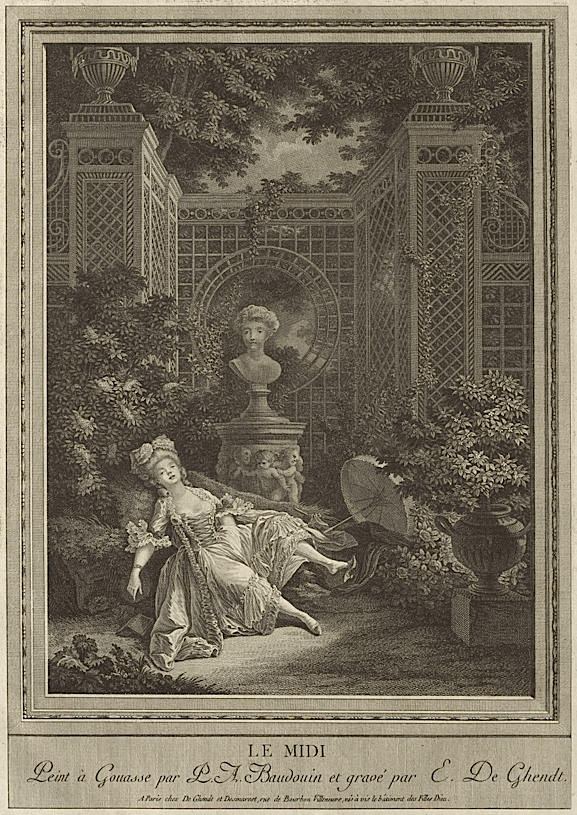
My current research lies in the intersection between medicine, gender and sexuality in Britain during the long eighteenth century. I am particularly interested in femininity, female sexuality, and women’s agency – or perceived agency – over their bodies and minds.
My doctoral research contributes a gender history of female masturbation in eighteenth-century English medical discourse. Funded by the AHRC and a grant from Funds for Women Graduates, this project reconceptualises the anti-masturbation campaign in relation to women and femininity. From 1716, self-pleasure was promoted from obscurity to become the medico-moral obsession of the age. Based on qualitative intertextual analysis of medical literature between 1700 and 1800, this study reveals how the new alarm about women’s self-pleasure was inseparable from early modern gender politics. Masturbation, I argue, was a key site of conflict for early modern femininities, with anti-masturbation commentary exploiting longstanding anxieties about female sexuality to construct a new feminine norm.
Publications
- Elizabeth Schlappa, “Libertine London: Sex in the Eighteenth-Century Metropolis, by Julie Peakman, London, Reaktion Books, 2024, 360 pp., £25, ISBN 978 1 78914 847 3”, Women’s Writing 1-2 (2024). https://doi.org/10.1080/09699082.2024.2399370 [Book review]
- Elizabeth Schlappa, “Onania’s Letters and the Female Masturbator: Women, Gender, and the ‘Abominable Crime’ of Self-Pollution”, Journal of the History of Sexuality 32, no. 3 (2023): 313-336. http://doi.org/10.7560/JHS32304
A post-print version of this article is now available open access: https://www.researchgate.net/publication/373903570_Onania’s_Letters_and_the_Female_Masturbator_Women_Gender_and_the_’Abominable_Crime’_of_Self-Pollution
- Elizabeth Schlappa, “‘Monsters are they in Nature’: Female Masturbation and Constructions of Femininity in Early Eighteenth Century England”, Gender & History 35, no. 2 (2023): 452-471. http://doi.org/10.1111/1468-0424.12594
Available open access. An earlier version of this essay was awarded Gender & History‘s Graduate Essay Prize in 2020.
 elizabethschlappa.com